
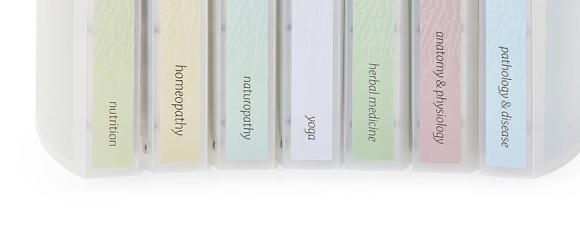
Choosing the Right Homeopathy Course
From home use to professional practice
If you're thinking about studying Homeopathy, you'll quickly discover that there are many different types of course available.
Some are designed to help you care for yourself and your family. Others introduce the philosophy of Homeopathy in greater depth. A smaller number provide the education, clinical experience and professional training needed to become a practising Homeopath.
So how do you know which course is right for you? The answer begins with a simple question: 'What do I hope to do with my homeopathy in the future?' There isn't a single 'best' course. There is simply the course that best matches your goals today.
Homeopathy for yourself, your family and pets
Many people first discover Homeopathy because they want to become more confident using natural medicines at home.
Perhaps you'd like to support your children with common illnesses, care for your pets naturally or simply build a well-stocked home remedy kit and understand when different remedies may be appropriate.
For these goals, a short introductory course is often the perfect place to begin.
These courses typically range from 20 to 60 hours and focus on acute prescribing, first aid situations and the safe use of commonly used homeopathic medicines.
At The School of Health, our Homeopathy for Home, Homeopathy for Babies & Children, and Homeopathy for Pets courses each provide around 60 hours of study, giving students the confidence to use Homeopathy safely and effectively in everyday situations.
For many people, this is the level of knowledge they are looking for. For others, it becomes the beginning of a much bigger journey.
Going beyond the basics
After completing an introductory course, many students discover they want to understand Homeopathy more deeply. They begin asking questions such as:
- Why do different people with the same illness need different remedies?
- How do Homeopaths choose between hundreds or even thousands of medicines?
- How does deeper constitutional prescribing work?
- What makes one case straightforward and another highly complex?
This is where longer foundation courses and intermediate programmes become valuable.
These courses introduce the philosophy of Homeopathy, the principles behind prescribing and a broader understanding of remedies. They allow students to experience the richness of the subject without immediately committing to full practitioner training.
For many students, they provide the confidence to decide whether Homeopathy is simply an interest or the beginning of a new career.
Becoming a professional Homeopath
If your ambition is to work professionally with patients, it's important to understand that becoming a confident Homeopath involves much more than learning about remedies.
Professional practice requires the ability to listen carefully, analyse complex cases, understand Materia Medica (remedies), work confidently with repertory, recognise when referral is appropriate, communicate professionally and develop sound clinical judgement. Perhaps most importantly, it requires clinical experience, that builds over time.
This is why practitioner training usually takes three to four years, together with extensive clinical observation, supervised practice, proving the opportunity to work with real patients before graduating.
The purpose of a professional programme isn't simply to teach information. It's to develop the knowledge, confidence and clinical judgement needed to practise safely and effectively.
Choosing a course that's right for your goals
Today's homeopathy education offers more choice than ever before.
Alongside short introductory courses and full practitioner programmes, you'll also find a growing number of courses that sit somewhere between the two.
These programmes often provide an excellent introduction to Homeopathy and may suit students who want to deepen their knowledge without committing to several years of study.
However, if your long-term ambition is to become a practising Homeopath, it's important to understand exactly what the course is designed to achieve.
Before enrolling, consider asking:
- What is the purpose of this course?
- Is it intended for home use or professional practice?
- How much supervised clinical training is included?
- Will I observe experienced Homeopaths working with real patients?
- Will I gain practical clinical experience before graduating?
- Does the qualification lead to professional registration with one of the main membership bodies?
- Will I feel confident beginning professional practice when I complete the course?
These questions are not about comparing schools. They're about making sure the course you choose matches your own aspirations.
Our approach
At The School of Health, we've been educating Homeopaths for more than four decades. Our Homeopathy programmes are designed as a progressive learning journey.
Some students begin with one of our First Aid Homeopathy Courses because they simply want to use Homeopathy with confidence at home.
Others continue to our Taster Course, or our Foundation Course, before progressing through to years 2-4 of the full practitioner programme with supervised clinical training.
There is no pressure to decide your final destination when you begin. Many students discover their passion for Homeopathy gradually, building their knowledge step by step as their confidence grows. We believe this creates thoughtful, capable practitioners who enjoy learning and develop naturally over time.
There isn't a wrong place to begin
Every experienced Homeopath was once a complete beginner. Some started with a beginners first aid course. Others were inspired after seeing a Homeopath themselves. Many simply became curious and wanted to understand how Homeopathy worked. The important thing is not choosing the longest course. It's choosing the course that is right for you today. We are here to help and give advise, contact us for a friendly chat.
If you begin with curiosity and a genuine desire to learn, you'll always have the opportunity to continue your journey in the future.
Still deciding?
You may also enjoy reading:
Related Guides
- Choosing a Natural health Course
- Herbalist or Homeopath
- Homeopath or Nutritionist
- Career in Natural Health
Homeopathy

I worked at an online academy, and this experience makes me doubly impressed by what you've created online. Even more importantly, what spoke to me through the website has proved to be authentic. You really DO respond to emails, you really ARE there to support every student. Catherine